Shop
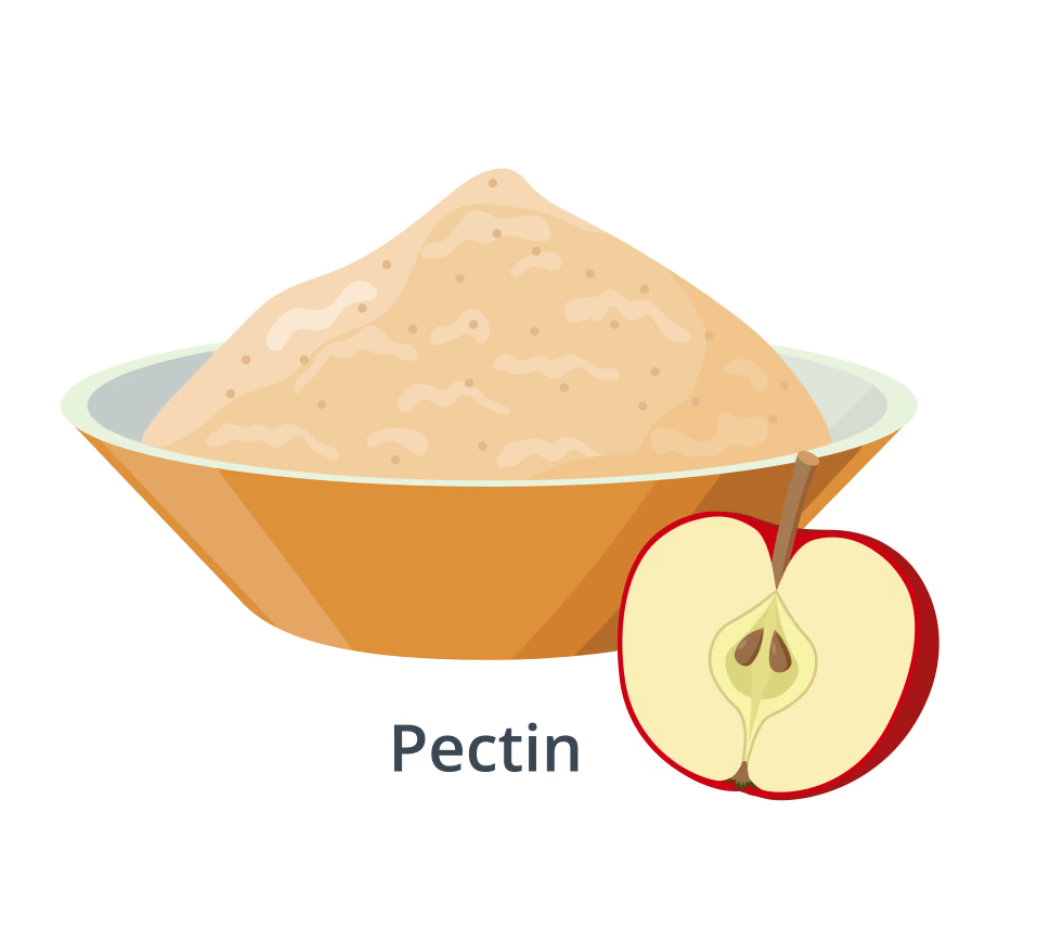
Pectin is a natural, water-soluble starch and structural fiber found in the cell walls of fruits and vegetables (such as apples, citrus peels, and currants) that acts as a natural binding agent.
What Pectin Does
• Gelling Agent: When heated with sugar and acid, it absorbs liquid and forms a gel, which makes it the foundation for setting jams, jellies, and marmalades.
• Plant Structure: In living plants, it acts like a structural “glue” that helps keep cells bound together and maintains plant firmness.
• Vegan Gelatin Alternative: It is commonly used in commercial cooking and baking as a plant-based substitute for animal-derived gelatin.
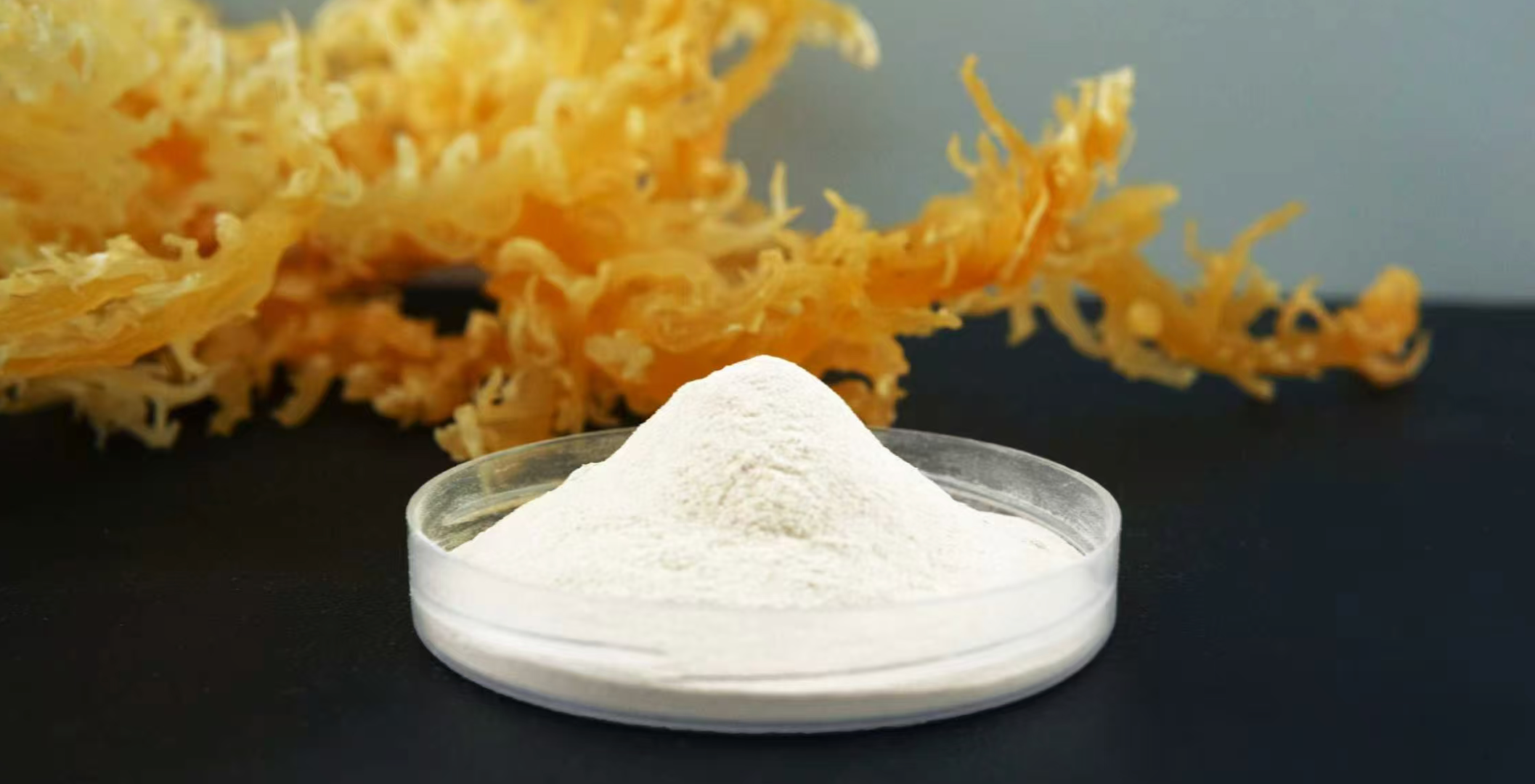
Carrageenan is a natural, water-soluble carbohydrate (specifically a sulfated polysaccharide) extracted from red edible seaweeds, such as Irish moss (Chondrus crispus)
What It Does
- Thickens and stabilizes: Manufacturers add it to foods and drinks to create a smooth texture, prevent ingredients from separating, and retain moisture.
- Common sources: You can find it in plant-based milks (like almond or oat milk), ice cream, yogurt, cottage cheese, deli meats, salad dressings, and some non-food items like cosmetics.
- Main types: The three primary forms are kappa (creates firm gels with dairy), iota (creates soft, elastic gels), and lambda (thickens without gelling).
This jellylike substance is a mix of carbohydrates that have been extracted from red algae, a type of seaweed. Agar has several uses in addition to cooking, including as a filler in sizing paper and fabric, a clarifying agent in brewing, and certain scientific purposes. It is also known as China glass, China grass, China isinglass, Japanese kanten, Japanese gelatin, and dai choy goh, and is used in certain Japanese dessert recipes.
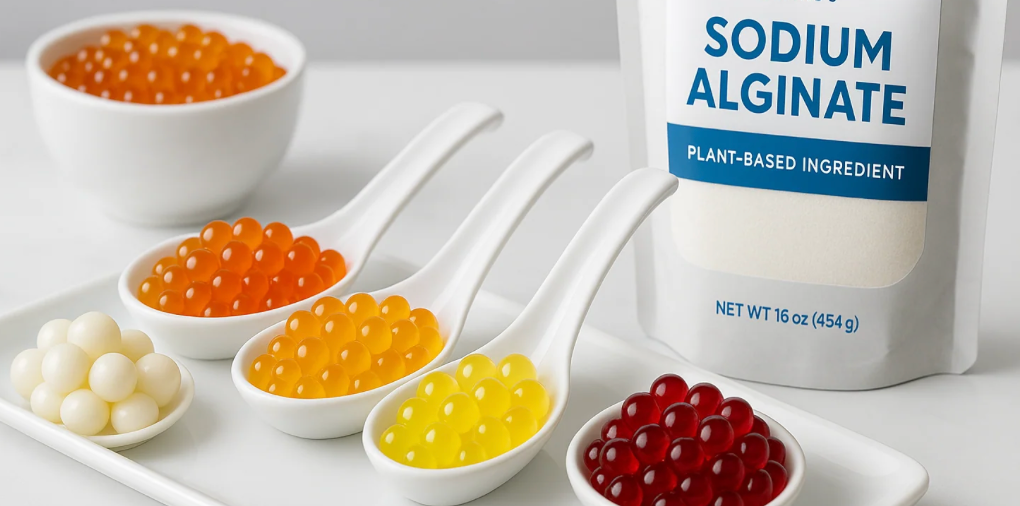
Sodium alginate is a water-soluble polysaccharide found in brown seaweed. It is a multi-purpose food additive (e.g., emulsifier, thickener, stabilizer).
Propylene glycol alginate (PGA) is an emulsifier, stabilizer, and thickener used in food products. It is a food additive with E numberE405. Chemically, propylene glycol alginate is an ester of alginic acid, which is derived from kelp. Some of the carboxyl groups are esterified with propylene glycol, some are neutralized with an appropriate alkali, and some remain free.
Gellan Gum is a gelling agent of vegetable origin that comes from bacterial fermentation. It has a texture very similar to Agar-agar with the difference that Gellan Gum withstands higher temperatures, which allows the elaboration of gelatins for bakable fillings.
Gellan Gum is a versatile ingredient ideal for creating sheets and ravioli, as well as oil jellies with innovative textures. Its heat resistance makes it perfect for croissant and sponge cake fillings, plum cake cubes, and jellies that maintain their structure even under extreme conditions.
Glucomannan (also known as Konjac) plant, or the root, is a Japanese root vegetable that is full of fibre. It has been used by people in East Asia for thousands of years and is mainly grown in Asian countries. The fiber is composed of mannose and glucose. It has the highest viscosity and molecular weight when compared with other dietary fibers.
Key Characteristics
- Main Component: It is composed primarily of glucomannan, a high-molecular-weight polysaccharide made of glucose and mannose units.
- High Viscosity: It has an exceptionally high water-absorption capacity and can form thick gels or viscous solutions.